



Featured News
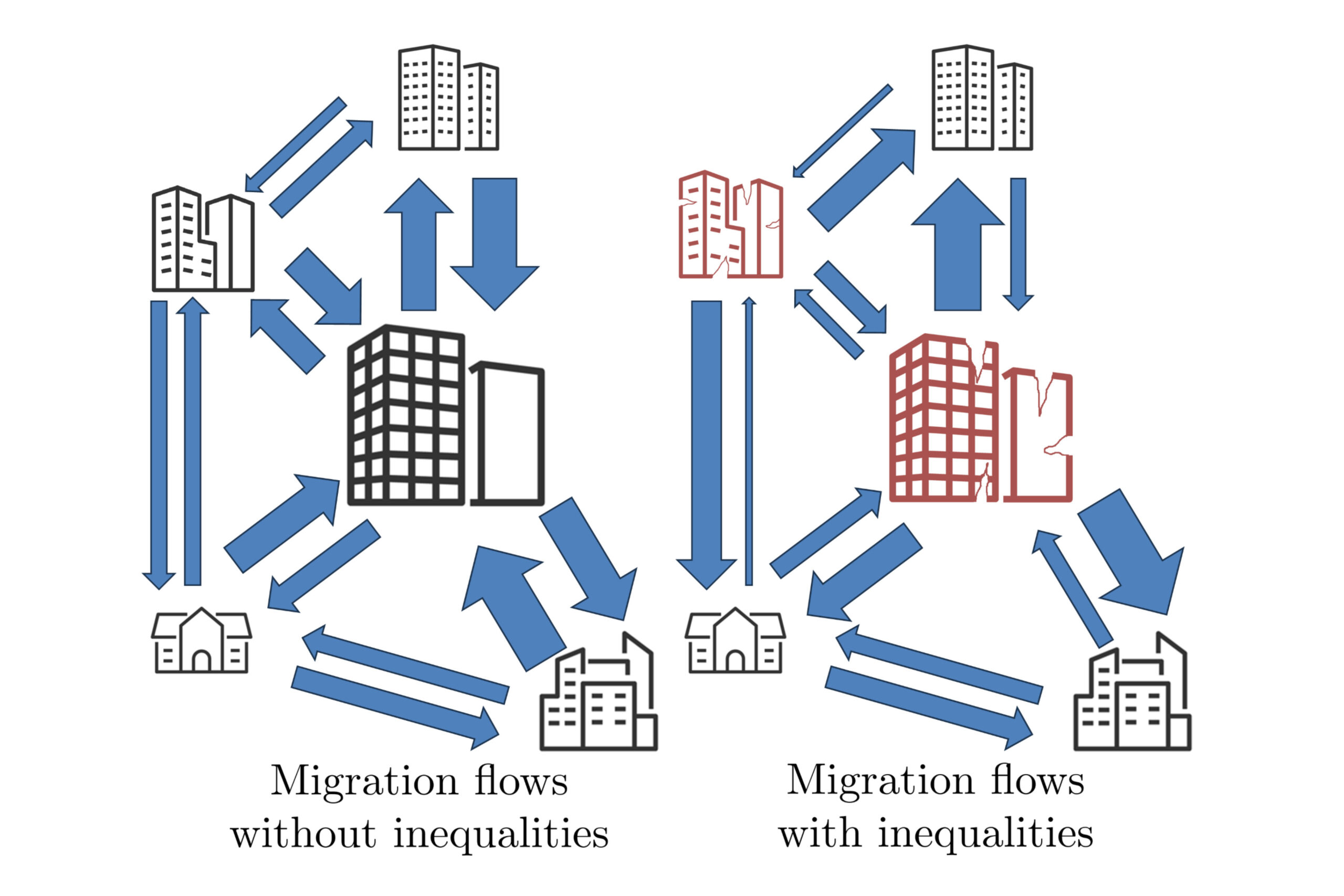
Examining the Role of Inequality in Human Migration
Mathematical models fall short in their predictions of migration. Associate Professor of Mechanical Engineering Alain Boldini, Ph.D., seeks to improve these models by including conflicts, natural disasters, and economic factors. The post Examining the Role of Inequality in Human Migration appeared first on New York Tech.
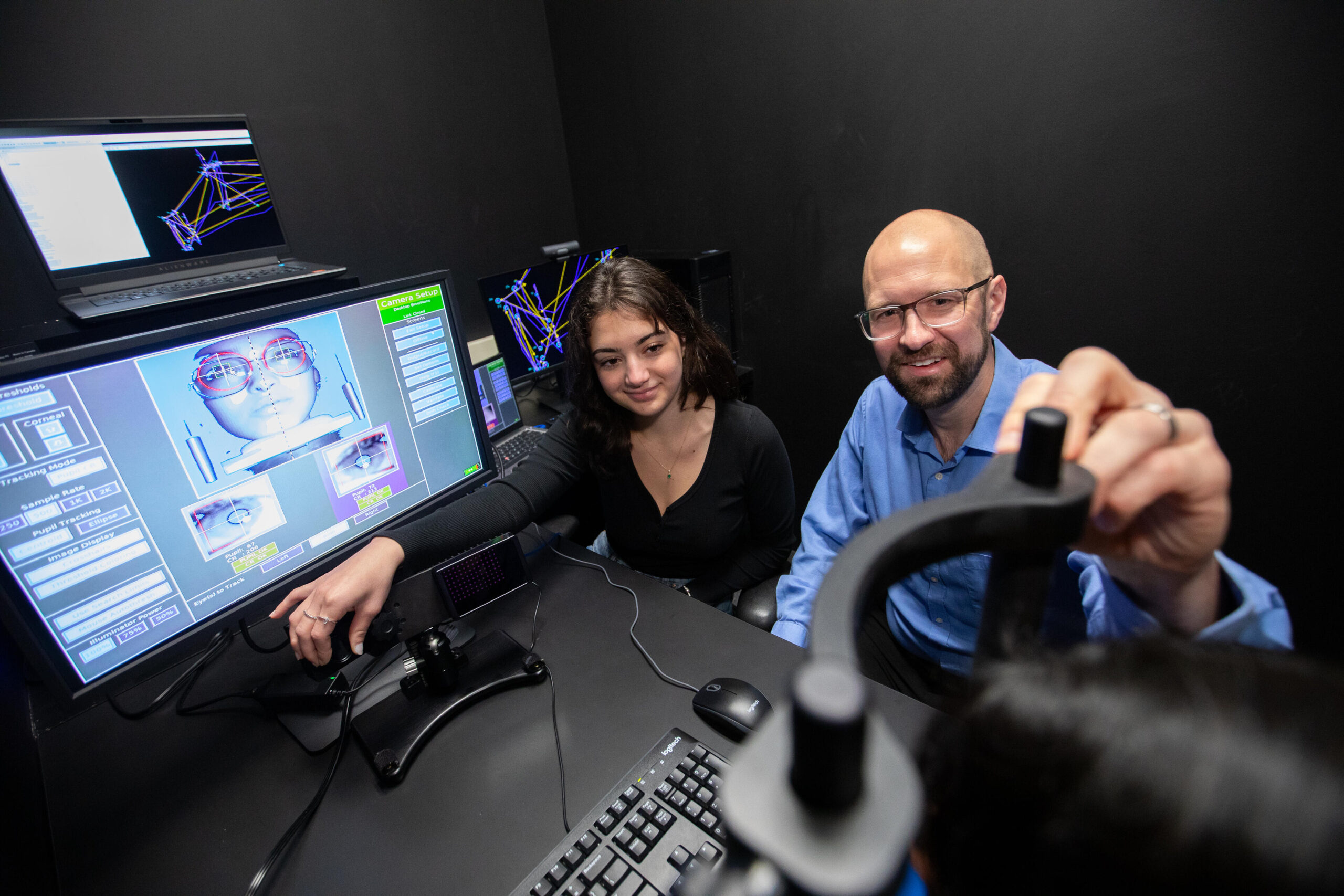
Student Wins Best Presentation in Puerto Rico
Life sciences/osteopathic medicine student Talia Lilikakis traveled to Puerto Rico for the Annual Meeting of the Society of Thoracic Radiology, where she won Best Student Oral Scientific Presentation. The post Student Wins Best Presentation in Puerto Rico appeared first on New York Tech.

Upcoming Events
- Apr 612:30 PM3D Printing at the Library (NYC)New to 3D printing at New York Tech? In this 30-minute orientation, you will learn the end-to-end workflow: how to prep your model and slice it in Bambu Studio, and how print requests and reviews work before anything goes on a machine. Also covered: available printers, including the Bambu Lab X1, H2D 3D, and H2S; and what material sand colors may be available.Register (https://cglink.me/2rJ/r381650)
- Apr 812:00 PMLeadership Lunch with President Jerry BalentineJoin us for the Leadership Lunch Series, an opportunity to socialize with your faculty and staff colleagues while enjoying a delicious, specially prepared meal. Each lunch will feature a presentation by a special "Guest Chef" who will share their passion for cooking and a favorite recipe, followed by a delicious lunch prepared by the professional chefs from NYIT de Seversky Mansion. Please join all four guest chefs for this Leadership Lunch Series. (https://events.nyit.edu/all/tags/leadership%20lunch%20series) Each event takes place from noon to 1:30 at the NYIT de Seversky Mansion. Wednesday, January 28: Dean Maria Perbellini Wednesday, February 25: Dean Babak Beheshti Wednesday, March 11: Interim Provost Francine Glazer Wednesday, April 8: President Jerry BalentineEach lunch costs $20. Register for all four lunches for only $72.Please note: Only personal payment will be accepted. No P-Cards or budget codes will be accepted. You will be contacted after you register by a member of the NYIT de Seversky Mansion team regarding payment and dietary restrictions.Register (https://registrations.nyit.edu/event/leadership-lunch-series)
- Apr 911:00 AMSalten Library Book Swap!Take a book, leave a book! All day on April 9, the Salten Library will host a book swap event. You can take a book home and explore new titles recommended by library staff. Just remember to bring your own book to share!Register (https://cglink.me/2rJ/r382661)
- Apr 912:30 PMCulture Fest (LI)Experience the vibrancy of our community at Culture Fest! Enjoy a celebration of cultures from around the world. Meet and learn about New York Tech's cultural clubs while enjoying various international cuisines.Register (https://cglink.me/2rJ/r381523)
- Apr 91:00 PMAI & Critical FuturesDesign X Intelligence Symposium Design × Intelligence symposium investigates the evolving relationship between artificial intelligence and the design disciplines. As AI becomes increasingly capable of generating visual concepts and analyzing information and complex systems, it transforms not just the tools designers use but the nature of design agency itself. What happens to creativity, authorship, and decision-making when intelligent systems can initiate design solutions, learn user needs, predict results, and intervene in the design process? By engaging scholars, technology experts, architecture and design practitioners, the symposium positions design as a critical actor in shaping AI's trajectory. Rather than reacting to technological change, designers are invited to actively negotiate what ethical, imaginative, and humane forms of intelligence we want to cultivate—and how these will reshape the creative professions of the future. Introduction Maria Perbellini Dean of the School of Architecture and DesignView Bio (https://www.nyit.edu/bio/maria-r-perbellini/) Introduction and Moderation (Symposium Chair) Athina Papadopoulou Assistant Professor of Health and Design, School of Architecture and DesignView Bio (https://www.nyit.edu/bio/athina-papadopoulou/) Moderation Alessandro Melis IDC Foundation Endowed Chair, Professor M.S. Director Computational TechnologiesView Bio (https://www.nyit.edu/bio/alessandro-melis/) Speakers Heather Ligler Assistant Professor Florida Atlantic University Heather Ligler is an architect, design researcher, and educator. She is an Assistant Professor and Foundations Coordinator at the School of Architecture at Florida Atlantic University. Her scholarship engages shape grammars, rule-based design, history, and theory to study how formal approaches and emergent technologies enable architectural speculation. Heather received her Ph.D. and M.S. in Design Computation from Georgia Tech and her dual Bachelor of Architecture/Bachelor of Interior Architecture degrees from Auburn University. Discussion Topic: Towards Future Pedagogies: Foundations for AI-Embedded Architectural Education How should architectural education evolve considering advances in artificial intelligence? What skill sets are needed to advance creative agency with intelligent systems in design? This talk explores how formal methods in foundational coursework that emphasize analog computing and rule-based design prepare students for increased agency with emerging technologies. The presentation will feature insights from a pilot three-course sequence taught in the second and third years of a professional Bachelor of Architecture program that aims to teach students computational thinking and design thinking in parallel, priming them for a subsequent core design studios in environmental simulation, machine learning, and structural form-finding. Onur Yuce Gun Global Director of Computational Design New Balance Athletics Trained at MIT with a Master's and Ph.D. in Design and Computation, Onur Yüce Gün's work challenges the binary between algorithm and meaning. As the founder and Global Director of Computational Design at New Balance, he leads and manages the company's unique computational design ecosystem for product creation. He plays a key role in advancing data-driven design, artificial intelligence, machine learning, 3D printing, and innovations in fit and wear. Onur previously led the Computational Geometry Group at KPF, co-founded the architecture program at Istanbul Bilgi University, and helped build the computational design team at Samsung Research America as the consulting lead. He has lectured at MIT, Harvard, RISD, and UAI. Gün's contributions defy hype and emerge through structure, embedded cognition, value and function. Discussion Topic: You're Worth Nothing (to AI): What intelligence erases when meaning becomes statistics As artificial intelligence increasingly penetrates creative domains, multi dimensional statistical models are trusted over human judgment for value creation. This talk examines how intelligence, when reduced to probabilities and correlations, systematically erases ambiguity, intention, and authorship, the very conditions under which design operates. As meaning becomes measurable, outliers disappear and human intention collapses toward zero dimension. Reframing AI as a powerful yet incomplete filter rather than an objective authority, this lecture argues that the future of design depends first on a rigorous understanding of human intelligence: what it preserves, what it resists, and what it cannot surrender to computation. Charlie Portelli Digital Innovation Strategist and Computational Designer Perkins & Will A licensed architect based in New York City, Charles was recently elevated to the College of Fellows of the American Institute of Architects (FAIA) in recognition of his contributions to computational design practice. He has strong interests in exploring new methodologies that link computation, design, and fabrication. Currently, he is a Senior Associate and Digital Innovation Strategist for Perkins&Will's I/O group, where he focuses on envisioning 3D models and data as a focal point for project design and delivery strategies. Charles also teaches Environmental Parametrics at Rensselaer Polytechnic Institute's Center for Architecture Science and Ecology (CASE) program, where he focuses on combining parametric modeling, optimization, and daylighting as a strategy to inform design. Previously, he has taught and guest lectured at multiple institutions, including Pratt, CUNY College of Technology, New Jersey Institute of Technology, and MIT. Discussion Topic: Co-Intelligence: Architects and Algorithms This presentation explores how AI is moving from theory to practice in architecture. Through a series of projects developed at Perkins&Will, including intelligent data classification, augmented site analysis, and deep learning models for drawing interpretation, we will examine how AI tools are being integrated into real workflows to address specific design and delivery challenges. This talk showcases working applications in use today, shares lessons learned from implementation, and offers practical strategies for thoughtfully incorporating AI into the architect's toolkit. Alexandros Haridis Lecturer in Design Computing Harvard UniversityAlexandros Haridis is an architect and design computation researcher whose work positions architecture as a unique testbed for questions about computational intelligence, aesthetics, and the mathematical description of form. His research has appeared in Nexus Network Journal, Computers & Graphics, Environment and Planning B, and other venues. He currently conducts research and teaches design computation at Harvard University's School of Engineering and Applied Sciences and the Graduate School of Design. Haridis received a PhD in Architecture: Design and Computation as Presidential Fellow and Masters of Science degrees in Architecture Studies and in Computer Science from MIT. Discussion Topic: Beyond Data-Driven Aesthetics At the 1956 Dartmouth Summer Research Project, "creation"-"evaluation" processes were identified as one of seven key aspects of human intelligence that future AI research must address. Nearly seventy years later, AI systems increasingly simulate these processes across architecture, art, design, and scientific discovery. This talk presents Beyond Data-Driven Aesthetics, a study of how twentieth- and early twenty-first-century academic and industry efforts in the United States transformed computing into a medium for both creative production and aesthetic judgment in architecture and the applied arts. The talk coincides with a multimedia exhibition at MIT's Keller Gallery (April–August 2026). Loukia Tsafoulia Associate Professor & Co-director Digital Innovation Strategist Synesthetic Research & DesignThomas Jefferson University Loukia Tsafoulia is a tenured Associate Professor of Architecture at Thomas Jefferson University and co-director of the Synesthetic Research and Design Lab, where inclusive design, multimedia art, and cognitive sciences meet. Her work has been exhibited internationally, including at the Venice Architecture Biennale, BASE Milan, and Trajan's Market in Rome. Recent activities include the S+T+ARTS ReSilence EU residency, a ROM writing fellowship, the AACSRE 2025 emerging fellowship, and a research fellowship at the Jefferson Institute of Smart & Healthy Cities. Her scholarship includes the books Transient Spaces (2019) and KatOikia (2024), and she co-organizes the International Neurodiversity and the Built Environment symposia Discussion Topic: Designing Intelligence Otherwise What does it mean to design with intelligence rather than through it? This talk traces a lineage between design and the mind sciences, arguing that the future of design intelligence is inseparable from embodied, relational, and caring ways of knowing—and that the deeper questions concern not capability, but whose perception counts. Through our design-research work at the Synesthetic Research and Design Lab, we examine how responsive environments, multimedia art, sensory ethnography, and computational systems—used as intertwined modalities—can amplify human intelligence. When intelligence is understood as relational rather than algorithmic, intelligent systems become co‑performers within ecologies of lived experience. We invite designers to consider which forms of intelligence to cultivate—those that center the sensory, the marginal, and the deeply felt—toward more ethical, empathetic, and imaginative futures. Severino Alfonso Assistant Professor & Co-director Synesthetic Research e Design LabThomas Jefferson University Severino Alfonso Dunn is a registered architect, researcher, and artist whose work bridges design, technology, and human perception. He is an Assistant Professor at Thomas Jefferson University, where he co-directs the Synesthetic Research and Design Lab (SR&DL). Through SR&DL, Severino develops research-driven installations and interactive prototypes that integrate art, health, and emerging technologies. His work has been exhibited internationally at BASE Milan, the IE Creativity Centre in Segovia, Trajan's Market Museum in Rome, the Venice Architecture Biennale, the Municipal Theater of Piraeus, and beyond. He recently completed the S+T+ARTS ReSilence Residency, is a Fellow of the TJU Institute for Smart and Healthy Cities, and a resident of VOICE: Valorising Artist-led Innovation through Citizen Engagement. Discussion Topic: Designing Intelligence Otherwise What does it mean to design with intelligence rather than through it? This talk traces a lineage between design and the mind sciences, arguing that the future of design intelligence is inseparable from embodied, relational, and caring ways of knowing—and that the deeper questions concern not capability, but whose perception counts. Through our design-research work at the Synesthetic Research and Design Lab, we examine how responsive environments, multimedia art, sensory ethnography, and computational systems—used as intertwined modalities—can amplify human intelligence. When intelligence is understood as relational rather than algorithmic, intelligent systems become co‑performers within ecologies of lived experience. We invite designers to consider which forms of intelligence to cultivate—those that center the sensory, the marginal, and the deeply felt—toward more ethical, empathetic, and imaginative futures. Diego Pinochet Computational Designer Diego Pinochet is an internationally awarded architect, computational design leader, and innovator. He has been a researcher and educator for over 15 years in the United States and Chile. Trained as an architect, he hold a Ph.D. and a Master of Science degree from the Massachusetts Institute of Technology. Currently, he is the head of Computational Designer at Samsung Research America, where he is spearheading the integration of design and artificial intelligence to boost the future of product design and user experience. Discussion Topic: A Computational Design Trichotomy The emergence of digital computation in design reinforced the traditional view that 'to design' is 'to think,' 'to represent' is 'to plan,' and 'to make' is 'to fabricate.' Under this computational design trichotomy, the uniqueness of the gesturing hand to sense, communicate, grasp, shape, and interface in the world have been traditionally overlooked, relegating making as a peripherical stage of the creative process where no intellectual development -apparently- occurs. In this presentation I delve into how hand gestures have the power of blurring the limits imposed by the computational trichotomy reframing design as an integrated process in which representing, thinking, and making are intertwined and inseparable. I start from the assumption that 'to make' equals 'to design,' and propose a 'computational gestural making' framework to capture the potential of the interaction between human gestures, intelligent machine behavior, and material context. Register (https://site.nyit.edu/aux/event_rsvp?e=Rqd63GFH8iLd7bkRqjxY8affP%2BBaTnN57JNojIl2%2FZQWXm4lcR19kSsK5MOfHozK79XIuv8LyL88SgpbBEcrTazNQ4VqAkqBmHj5%2BQcbPRfgQIOvrLpob6BhwxGV%2Fs3fqPE2wyQrnqOfe0Cq3RoZsQ%2BmsLuA1SpJQi3yKig9aE8zAh41Rfp7azdAkdBABQ5Dyl2pGxohGOurU5YENI8PTCMJrMDoBT%2FB4h1jbwg%2FxpMonFkCNXfJKu6lqxgGwQCAoj8Jdf%2FU26vYf2ZDu8cz9v4Amq70kTXz%2FKNrA1O9cRc%3D)
Connect With Us
Top 15 in the Region


Featured News
- Examining the Role of Inequality in Human MigrationMathematical models fall short in their predictions of migration. Associate Professor of Mechanical Engineering Alain Boldini, Ph.D., seeks to improve these models by including conflicts, natural disasters, and economic factors. The post Examining the Role of Inequality in Human Migration appeared first on New York Tech.
- Student Wins Best Presentation in Puerto RicoLife sciences/osteopathic medicine student Talia Lilikakis traveled to Puerto Rico for the Annual Meeting of the Society of Thoracic Radiology, where she won Best Student Oral Scientific Presentation. The post Student Wins Best Presentation in Puerto Rico appeared first on New York Tech.
